民主的发展
The development of democracy
- 英国是议会民主制国家,同时是君主立宪制。The UK is a parliamentary democracy with a constitutional monarch.
- 19 世纪选举权逐步扩大;1918 年 21 岁以上男性和 30 岁以上女性获得投票权,1928 年男女同为 21 岁,1969 年投票年龄降至 18 岁。The vote was gradually widened in the 19th century. In 1918 men over 21 and women over 30 could vote; in 1928 women gained the vote at 21 like men; in 1969 the voting age fell to 18.
- 1872 年引入无记名投票,选民可以秘密投票。The secret ballot was introduced in 1872.
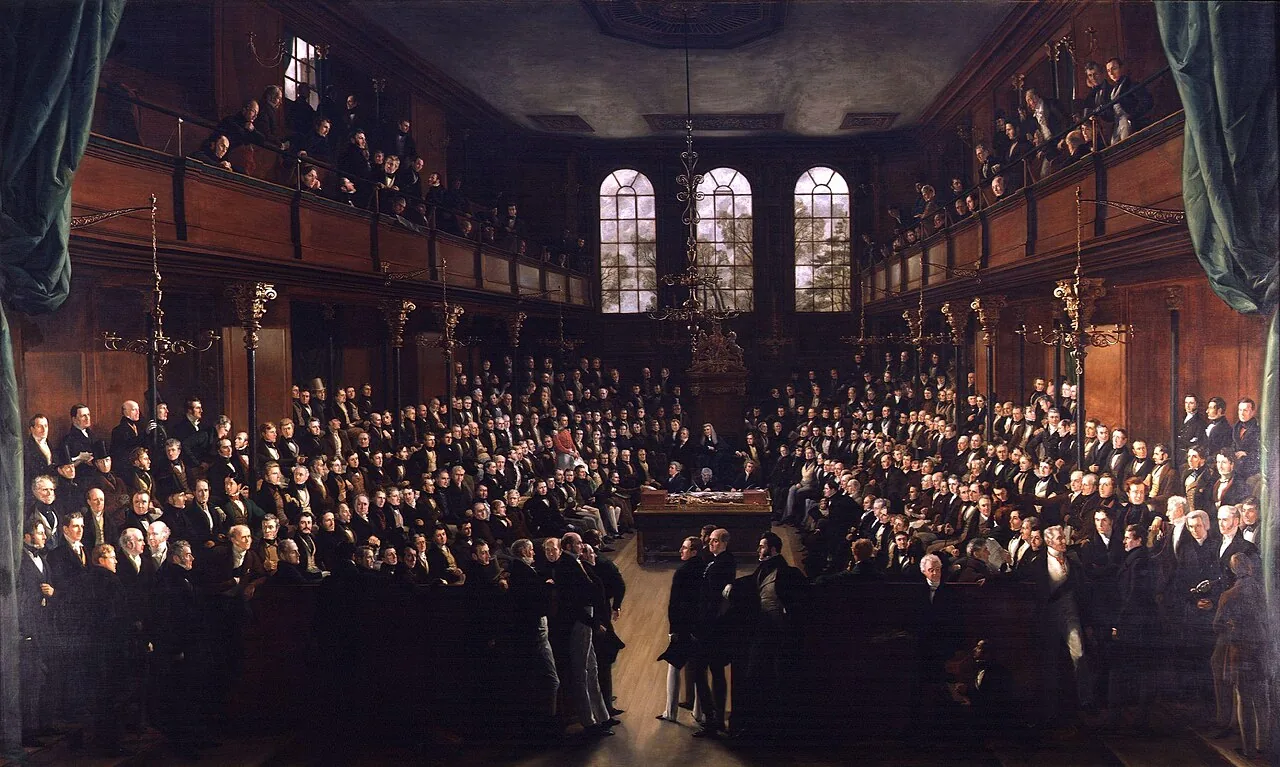
英国没有成文宪法:宪法由议会法律、惯例和法院判例共同构成,可以随时代演进。核心机构包括君主、议会(两院)、首相与内阁、司法机构、警察、公务员体系和地方政府,以及苏格兰、威尔士、北爱尔兰的权力下放政府。
The UK has no written constitution in a single document. It is made up of Acts of Parliament, conventions and court decisions, and can change over time. Its institutions include the monarchy, Parliament (two Houses), the Prime Minister and Cabinet, the judiciary, the police, the civil service, local government and the devolved governments of Scotland, Wales and Northern Ireland.
君主立宪制 ⭐
The constitutional monarchy
- 现任君主是国王查尔斯三世,2022 年继位;王位继承人是威廉王子。The current monarch is King Charles III, who became King in 2022; the heir is Prince William.
- 君主是国家元首,但不制定法律,按照民选政府的建议行事,保持政治中立。The monarch is head of state but does not make laws; he acts on the advice of the elected government and stays politically neutral.
- 君主的职责包括:每年在议会开幕大典上宣读国王演讲(列出政府计划)、每周会见首相、任命首相、对法案给予御准。The monarch's role includes reading the King's Speech at the State Opening of Parliament (setting out the government's plans), meeting the Prime Minister weekly, appointing the Prime Minister and giving Royal Assent to laws.
- 君主同时是英联邦元首,也是英格兰教会的最高领袖。国歌为《天佑国王》(God Save the King)。The monarch is also Head of the Commonwealth and Supreme Governor of the Church of England. The national anthem is "God Save the King".
手册出版时的君主是伊丽莎白二世(1952–2022 年在位,在位时间最长的英国君主)。2022 年 9 月 8 日她去世后,查尔斯三世即位,2023 年 5 月 6 日在威斯敏斯特教堂加冕。
When the handbook was published the monarch was Elizabeth II, who reigned from 1952 to 2022, longer than any other British monarch. After she died on 8 September 2022, Charles III became King and was crowned at Westminster Abbey on 6 May 2023.
议会两院 ⭐
The Houses of Parliament
- 议会由下议院和上议院组成,设在伦敦威斯敏斯特宫。Parliament has two Houses, the House of Commons and the House of Lords, at the Palace of Westminster in London.
- 下议院有 650 名议员(MP),各代表一个选区,由选民选出;下议院是更重要的一院。The House of Commons has 650 MPs, each representing a constituency and elected by voters. It is the more important chamber.
- 议长(Speaker)由议员选出,主持辩论,必须保持政治中立。The Speaker, chosen by MPs, chairs debates and must stay politically neutral.
- 上议院议员不经选举:主要是由君主根据首相建议任命的终身贵族,以及英格兰教会的 26 位主教。Members of the House of Lords are not elected. Most are life peers appointed by the monarch on the Prime Minister's advice, plus 26 Church of England bishops.
- 上议院审议法案、提出修改建议,但最终下议院可以否决上议院的意见。The Lords examine laws and suggest changes, but the Commons can overrule the Lords.
- 党鞭(whips)负责确保本党议员出席投票并按党的立场投票。Whips make sure their party's MPs attend and vote as the party wants.
一项法案要成为法律,需在两院分别经过多轮辩论(读会),最后获得君主御准。议会辩论全程记录在 Hansard 中,公众可以旁听辩论,也可以在线观看。
A bill becomes law after debates (readings) in both Houses and then Royal Assent. Everything said in Parliament is recorded in Hansard, and the public can watch debates in person or online.
首相、内阁与反对党 ⭐
Prime Minister, Cabinet and Opposition
- 首相通常是下议院多数党的领袖,由君主任命;官邸是唐宁街 10 号,乡间官邸是契克斯(Chequers)。The Prime Minister is normally the leader of the party with the most MPs, appointed by the monarch. The official home is 10 Downing Street; the country house is Chequers.
- 首相任命约 20 名高级部长组成内阁,每周开会。The Prime Minister appoints about 20 senior ministers to the Cabinet, which meets weekly.
- 财政大臣负责经济;内政大臣负责犯罪、警务和移民;外交大臣负责对外关系。The Chancellor of the Exchequer is responsible for the economy, the Home Secretary for crime, policing and immigration, and the Foreign Secretary for relations with other countries.
- 第二大党是反对党,其领袖是反对党领袖,组成"影子内阁"。The second-largest party forms the Opposition; its leader is the Leader of the Opposition, who leads a Shadow Cabinet.
- 首相问答(PMQs)在议会开会期间每周一次。Prime Minister's Questions takes place every week while Parliament is sitting.
- 公务员执行政府政策,必须保持政治中立。Civil servants carry out government policy and must be politically neutral.
英国传统上是两党轮流执政:保守党与工党。其他政党包括自由民主党、苏格兰民族党(SNP)、威尔士党(Plaid Cymru)等。2010–2015 年曾出现保守党与自由民主党的联合政府。
Power has traditionally alternated between the Conservative and Labour parties. Other parties include the Liberal Democrats, the Scottish National Party (SNP) and Plaid Cymru; from 2010 to 2015 the Conservatives and Liberal Democrats governed in coalition.
选举与投票 ⭐
Elections and voting
- 议会大选至少每 5 年举行一次,采用简单多数制(first past the post):每个选区得票最多的候选人当选。General elections are held at least every five years, using first past the post: the candidate with the most votes in each constituency wins.
- 议员去世或辞职时,该选区举行补选(by-election)。If an MP dies or resigns, a by-election is held in that constituency.
- 大选投票年龄为 18 岁;苏格兰议会、威尔士议会及当地地方选举为 16 岁。The voting age for general elections is 18. For Scottish Parliament, Senedd and local elections in Scotland and Wales it is 16.
- 可在大选投票的人:年满 18 岁的英国公民,以及居住在英国的爱尔兰公民和符合条件的英联邦公民。You can vote in general elections if you are 18 or over and a UK citizen, or an Irish or qualifying Commonwealth citizen living in the UK.
- 投票前必须登记在选民名册(electoral register)上;投票站开放时间为早 7 点至晚 10 点,也可邮寄投票。You must be on the electoral register to vote. Polling stations are open from 7am to 10pm; you can also vote by post.
- 年满 18 岁的英国、爱尔兰或英联邦公民大多可以参选议员。Most citizens of the UK, Ireland or the Commonwealth aged 18 or over can stand for election as an MP.
欧盟公民(爱尔兰、马耳他、塞浦路斯公民除外)不能在大选中投票,但符合条件的可以参加部分地方选举。如今在英国大选和英格兰地方选举中投票,需出示带照片的身份证件(2023 年起实施;北爱尔兰更早就有此要求)。
EU citizens (apart from Irish, Maltese and Cypriot citizens) cannot vote in general elections, though some can vote in certain local elections. Voters now need photo ID at the polling station for UK general elections and local elections in England (introduced from 2023; Northern Ireland has required it for longer).
你可以联系你所在选区的议员:写信、发邮件,或参加议员定期举办的"接待日"(surgery)。查找议员可以用议会官网 parliament.uk。
You can contact your local MP by letter or email, or go to one of their regular "surgeries". Find your MP on parliament.uk.
权力下放 ⭐
Devolved government
- 1997 年起,部分权力下放给苏格兰、威尔士和北爱尔兰;1999 年苏格兰议会和威尔士议会成立。Since 1997 some powers have been devolved to Scotland, Wales and Northern Ireland; the Scottish Parliament and Welsh Assembly were set up in 1999.
- 苏格兰议会在爱丁堡的荷里路德,共 129 名议员(MSP),可就外交、国防等"保留事项"以外的大多数事务立法。The Scottish Parliament sits at Holyrood in Edinburgh and has 129 MSPs. It can make laws on most matters except "reserved" ones such as foreign affairs and defence.
- 威尔士议会(Senedd Cymru)在加的夫,负责教育、卫生、环境等事务。The Senedd (Welsh Parliament) sits in Cardiff and covers education, health, the environment and more.
- 北爱尔兰议会设在斯托蒙特(Stormont),有 90 名议员(MLA),实行分权共治;议会曾多次暂停运作。The Northern Ireland Assembly sits at Stormont with 90 MLAs and works on a power-sharing basis; it has been suspended several times.
- 外交、国防、税收主体、移民等由英国议会负责。Foreign policy, defence, most taxation and immigration remain with the UK Parliament.
| 议会 Body | 议员 Members | 选举方式 Voting system | |
|---|---|---|---|
| 苏格兰 Scotland | 苏格兰议会 · 爱丁堡 Scottish Parliament · Edinburgh | 129 MSPs | 附加成员制(选区+名单) Additional member system |
| 威尔士 Wales | Senedd · 加的夫 Senedd · Cardiff | 96(2026 年起) 96 (from 2026) | 封闭式政党名单比例代表制 Closed-list proportional representation |
| 北爱尔兰 Northern Ireland | 北爱议会 · 斯托蒙特 NI Assembly · Stormont | 90 MLAs | 单记可让渡投票制 Single transferable vote |
地方政府(郡、市、区议会)负责垃圾收集、图书馆、社会服务、规划、部分教育事务等,资金来自中央拨款和市政税(council tax)。地方选举通常在 5 月举行。许多城市有市长;2012 年起英格兰和威尔士各警区选举产生警察与犯罪专员(PCC)。
Local authorities (county, city and district councils) run services such as rubbish collection, libraries, social care, planning and some education, funded by central government and council tax. Local elections are usually held in May. Many towns have a mayor, and since 2012 each police area in England and Wales has elected a Police and Crime Commissioner.
英国与国际组织
The UK and the wider world
- 英联邦是主要由前英国殖民地组成的自愿联合体,君主是英联邦元首。The Commonwealth is a voluntary association of countries, mostly former parts of the British Empire; the monarch is its head.
- 英国是联合国安理会五个常任理事国之一。The UK is one of the five permanent members of the UN Security Council.
- 英国是 1949 年成立的北约(NATO)创始成员国。The UK is a founding member of NATO, set up in 1949.
- 欧洲委员会(Council of Europe)与欧盟不同,负责保护人权;《欧洲人权公约》由它制定。The Council of Europe is separate from the EU and protects human rights; it created the European Convention on Human Rights.
英联邦目前有 56 个成员国,人口约占世界三分之一。成员国共同承诺维护民主、人权和法治。
The Commonwealth has 56 member countries, home to about a third of the world's population. Members commit to democracy, human rights and the rule of law.
法律与法院 ⭐
Respecting the law and the courts
- 刑法处理危害社会的犯罪(如盗窃、袭击);民法处理个人或机构之间的纠纷(如合同、房东租客、工作纠纷)。Criminal law deals with crimes against society, such as theft or assault; civil law settles disputes between people or organisations, such as contracts, housing or employment.
- 英格兰、威尔士:轻罪在治安法院审理,由无薪的治安法官(magistrates / JP)裁决;严重案件在刑事法院审理,由法官和 12 人陪审团审判。In England and Wales, minor criminal cases go to a Magistrates' Court, decided by unpaid magistrates (JPs); serious cases go to the Crown Court, with a judge and a jury of 12.
- 苏格兰:轻罪在治安法官法院,严重案件在郡法院或高等刑事法院;陪审团为 15 人。In Scotland, minor cases go to a Justice of the Peace Court; serious ones to a Sheriff Court or the High Court. Juries have 15 people.
- 10–17 岁被告在青少年法院审理。小额民事索赔(英格兰和威尔士 £10,000 以下)走小额索赔程序,无需律师。Defendants aged 10–17 go to a Youth Court. Small civil claims (under £10,000 in England and Wales) use the small claims procedure, without a lawyer.
- 最高法院是英国最终上诉法院(苏格兰刑事案件除外),2009 年成立。The Supreme Court is the final court of appeal in the UK (except for criminal cases in Scotland); it was set up in 2009.
- 法律援助:负担不起律师费的人可申请政府资助;公民咨询局(Citizens Advice)提供免费咨询。Legal aid helps people who cannot afford a lawyer; Citizens Advice gives free advice.
- 皇家检察署(CPS)决定是否在英格兰和威尔士提起刑事指控。The Crown Prosecution Service decides whether to bring criminal charges in England and Wales.
| 英格兰与威尔士 England & Wales | 苏格兰 Scotland | |
|---|---|---|
| 轻微刑事案件 Minor criminal | 治安法院 Magistrates' Court | 治安法官法院 Justice of the Peace Court |
| 严重刑事案件 Serious criminal | 刑事法院(陪审团 12 人) Crown Court (jury of 12) | 郡法院 / 高等刑事法院(陪审团 15 人) Sheriff / High Court (jury of 15) |
| 民事纠纷 Civil disputes | 郡法院、高等法院 County Court, High Court | 郡法院、民事最高法院 Sheriff Court, Court of Session |
警察的职责是保护生命财产、维持秩序、预防和侦查犯罪。警务社区支援官(PCSO)协助巡逻。如果你认为警察行为不当,可以向警队投诉,或向独立警察行为办公室(IOPC,英格兰和威尔士)投诉。
The police protect life and property, keep the peace, and prevent and detect crime. Police Community Support Officers (PCSOs) support them on patrol. If you think the police have behaved badly you can complain to the force or, in England and Wales, to the Independent Office for Police Conduct (IOPC).
| English | 中文 | 说明 |
|---|---|---|
| Common law | 普通法 | 由法院判例逐步形成的法律,与议会制定的成文法并存。 |
| Statute law | 成文法 | 议会通过的法律(Acts of Parliament)。 |
| Habeas corpus | 人身保护 | 未经法庭审理不得被关押的权利。 |
| Jury | 陪审团 | 从选民名册中随机抽取的普通人,决定被告是否有罪。 |
基本权利与平等
Fundamental rights and equality
- 英国参与起草了《欧洲人权公约》;1998 年《人权法》将其纳入英国法律。British lawyers helped draft the European Convention on Human Rights; the Human Rights Act 1998 brought it into UK law.
- 法律禁止基于性别、种族、宗教、残疾、年龄、性取向等的歧视。The law forbids discrimination on grounds such as sex, race, religion, disability, age and sexual orientation.
- 家庭暴力在英国是严重犯罪,无论是否已婚;女性割礼和强迫婚姻均属违法。Domestic violence is a serious crime, whether or not the couple are married. Female genital mutilation and forced marriage are illegal.
平等的保护体现在生活的方方面面:求职、租房、就医、上学。觉得自己受到歧视,可以向平等与人权委员会(EHRC)或公民咨询局求助。遭受家庭暴力,可拨打 999(紧急情况)或全国家暴求助热线。
Equal treatment applies across daily life: jobs, housing, healthcare and education. If you think you have been discriminated against, the Equality and Human Rights Commission or Citizens Advice can help. If you experience domestic abuse, call 999 in an emergency or contact a national domestic abuse helpline.
你的角色:税收、驾驶与社区 ⭐
Your role in the community
- 所得税和国民保险(National Insurance)从工资中扣缴,用于资助公共服务和养老金;每人都需要一个国民保险号码。Income tax and National Insurance are taken from your pay to fund public services and pensions; everyone needs a National Insurance number.
- 自雇人士需通过自我评估(self-assessment)自行报税。Self-employed people pay tax through self-assessment.
- 驾车需年满 17 岁并持有驾照;车辆须上保险、交车辆税,3 年以上的车每年需通过 MOT 检测。You must be at least 17 and hold a licence to drive. Cars must be insured and taxed, and those over three years old need an annual MOT test.
- 陪审团义务:选民名册上的人可能被随机抽中担任陪审员,除特殊情况外必须履行。Jury service: anyone on the electoral register may be chosen at random and must serve unless they have a good reason.
- 参与社区的方式:做志愿者、担任学校理事、成为治安法官、加入政党、献血或登记器官捐献、垃圾回收。Ways to help your community: volunteering, becoming a school governor, serving as a magistrate, joining a political party, giving blood or registering as an organ donor, and recycling.
陪审员年龄:英格兰和威尔士为 18–75 岁(2016 年起;手册写的是 70 岁),苏格兰为 18 岁以上。在英格兰,器官捐献已改为"默认同意"制度(2020 年起),不想捐献需主动登记。
Jurors must be 18 to 75 in England and Wales (since 2016; the handbook says 70) and 18 or over in Scotland. In England, organ donation became an opt-out system in 2020, so you need to register if you do not want to donate.
本章自测
Quick check
点选答案即可看到对错和解析。想按真实考试节奏练习,请做整套模拟题。
Syllabus points are our own summary of the topics in the official handbook Life in the United Kingdom: A Guide for New Residents (3rd edition). They are not quotations from it. Facts that have changed since the handbook was published are marked.
考纲要点为本站根据官方手册《Life in the United Kingdom: A Guide for New Residents》(第三版)考查范围自行整理,并非手册原文;手册出版后已发生变化的事实已注明。最后核实:2026年10月。